
Electromyography (EMG)
Electromyography (EMG) is a diagnostic test that assesses muscle and nerve health by measuring electrical signals. It helps diagnose muscle disorders, nerve disorders, and conditions affecting nerve-muscle connections. EMG is recommended for patients experiencing symptoms like tingling, numbness, muscle weakness, pain, cramping, paralysis, or involuntary muscle twitching. Results from an EMG aid doctors in identifying underlying causes such as muscular dystrophy, myasthenia gravis, radiculopathies, carpal tunnel syndrome, or nerve disorders like ALS.


Frequently Asked Questions
The test is performed by a neurologist the test in the neurophysiology lab assisted by the neurophysiology technologist.
You can eat normally the day of the test. Take your prescribed medications unless otherwise instructed. Do not use any lotions or powders on the area to be tested. Dress in loose clothes that allow esy access to the area to be tested or that are easily removed. Testing typically takes 30 to 60 minutes. The test always begins with a nerve conduction study test (NCS).
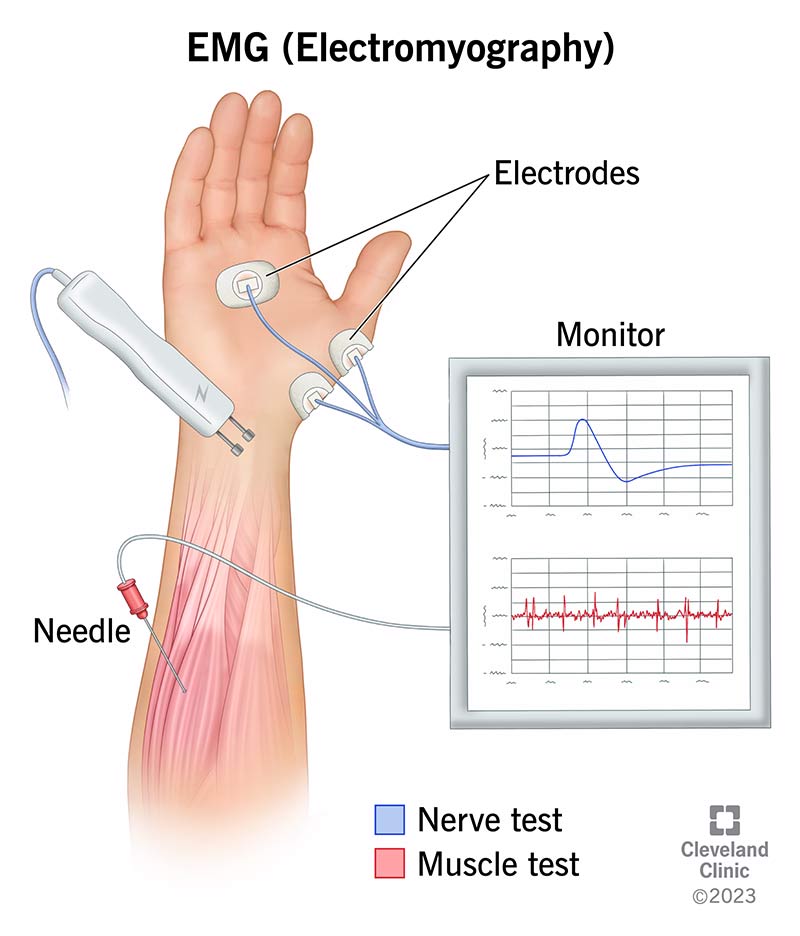
An EMG evaluates the electrical activity a muscle produces at rest and when it contracts, similar to an EKG of the heart muscle. The doctor places a single, small, Teflon-coated wire pin into selected muscles to be studied. The tip of the pin acts like an antenna, picking up electrical activity from the muscle that can be heard and seen on a screen. You will be asked to tighten (contract) the muscle. Electrical activity is recorded and can be heard as popping and clicking sounds when the muscle is contracting.
EMG and NCS tests have few side effects. Occasionally, the pin exam can cause a small bruise. This is more common in patients on blood thinners (Coumadin, Plavix) or anti-inflammatory drugs (ibuprofen, aspirin). You may feel some soreness for a day or two following the test. There are no activity restrictions, and you can drive home afterwards. The tests are safe and can be performed in people with pacemakers or defibrillators.
The test results are analyzed, and a report is sent to the doctor who ordered the test. A negative test means results are normal; a positive test result will reveal some degree of nerve damage (neuropathy).